Egypt’s Sunken Treasures Surface at Venaria Reale, Turin

egypt_venaria

It was a pleasure to return to the Venaria Reale near Turin after writing about it for the NYT about a year ago. The occasion: they’ve finished restoring an enormous exhibition space out of the former stables and greenhouse.

On this visit, all the work was done and tidy. Fortunately, the same friendly, low-key atmosphere of a magnificent place off the beaten track hasn’t changed.

Here’s what I wrote for the Wall Street Journal Europe:
About 1,300 years ago, a string of natural disasters rocked the coast off the modern-day port city of Alexandria, sending chunks of three Egyptian cities into the sea. Up from the depths after 15 years of underwater excavation by French archeologist Franck Goddio, “Egypt’s Sunken Treasures” takes visitors on a voyage back to the Ptolemaic, Byzantine, Coptic and early Islamic eras.

The 500-piece exhibit has toured several European cities, but for its Italian stop, at Turin’s Reggia di Venaria Reale, scenographer Robert Wilson designed backdrops for statues, jewelry, gold coins, ceramics and sphinxes. His theatrical settings, including a prologue with video installations of underwater excavations surrounded by graffiti-sprayed walls, are accompanied by a soundtrack put together by performance artist Laurie Anderson.

In 1996, Mr. Goddio and his team began to search for the lost cities of Herakleion and Canopus using nuclear resonance equipment. Under centuries of algae, sand and clay sediment, they made some exceptional finds. One of the show’s highlights is a pink granite statue of Nile deity Hapi; at 5.4 meters high, the round-faced god with a tray of offerings is the largest freestanding statue of an Egyptian divinity ever found. Hapi and other towering statues, including a Ptolemaic king and queen in pink granite, loom over visitors who wander through a room conceived to look like a sunken forest.

“Sunken Treasures” is the first exhibit in the newly restored stables and greenhouse of the Reggia, designed by Baroque architect Filippo Juvarra. These high-ceilinged, cavernous rooms cover nearly 5,000 square meters, but Mr. Wilson’s low, almost nocturnal lighting and the sound, which ranges from metal clinks meant to mimic the workshops where trinkets were made to swishing waves, produce an effect on the viewer similar to a post-prandial grappa, even at 11 a.m.

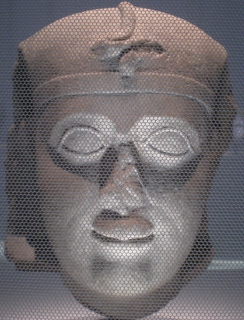
A welcome respite from undersea atmosphere comes in the “Sphinx Box,” a well-lit, airy room where the heads of sphinx statues are viewed through white netting. The show’s masterpiece, however, appears in the last room, aptly called Queen’s Dream. The harmonious figure of a woman draped in clinging robes is believed to be Queen Arsinoe II, sister and wife of Ptolemy II. Carved in gray-blue granite, her pose is typical of Egyptian statues, but the style of her dress is decidedly Greek.

Until May 31
www.lavenariareale.it

Italian Stallions Plagued By Size, Performance Anxiety

After receiving an avalanche of interest, Italian doctors repeated an initiative to help macho men in crisis.

Last year’s free hot line and website aimed at helping Latin lovers do their thing “without worries” received an unexpected 15,000 calls and a million web page views in a month.

Italian stallions evidently aren’t so hot to trot as tourist legend would have it.

Young Latin lovers from Southern Italy — where the climate is hot and even the food is considered “natural viagra” — are especially “worried, fragile and anxious” when it comes to sexual performance.

Well, they must have had an inkling something was amiss between the sheets: the initiative set up by the national association of andrology (SIA) was titled “amare senza pensieri” (love without worries).

Most frequent nagging questions? Duration, performance and size. Some 42.3% of the inquiries were from Southern Italy and just 11.4% from Northern Italy.

Although Giammusso said the size issue is often unjustified (one wonders if there were tape measures involved in the fretful phone calls) he does note that callers exhibited a lack of adequate sex education and the wrong role models.

Who knew that Fabios ever felt less than fabulous? By other measuring sticks, Italian men certainly sound satisfied.

If this crisis of confidence is really so widespread, it may be time to update the guidebooks.

Image used with a CC license, thanks to risager.

Tearjerker Film Fest Drowns Rome

strappamilacrime

Emotions will run high during what may be the world’s first movie festival designed to make moviegoers blubber like babies debuts in Rome.

Inspired by Japan’s crying clubs, the Tearjerker Film Fest is a two-week weep-a-thon. Called literally “jerk my tears,” or Strappami Le Lacrime in Italian, ticket prices for the festival are just four euro (about $5) and include a packet of tissues for the inevitable sob.

Although Italian neo-realist flicks have been known make many moviegoers sniffle in sorrow, the tearjerkers on offer here are mostly Hollywood classics, including “Splendor In The Grass,” “Letter From an Unknown Woman,” and “The Yearling.” The only Italian film included is Luigi Comencini’s “Incompreso,” about a young boy dealing with his mother’s death.

Film buffs can have a bawl at Rome’s Palazzo delle Esposizioni until March 15.

Picture Perfect: Art Show Text Messages Keep Visitors, Organizers Snap Happy

artext

There’s a lot of covert phone camera snapping at art exhibits. Cameras are almost never allowed (how could they sell postcards, otherwise?), but that doesn’t stop visitors from trying to get a picture of a work they want to look at again, later.

This is especially a problem in Italy, where there are more cellphones than people and text messages are used for everything from food price checks to flood alerts.

One solution?

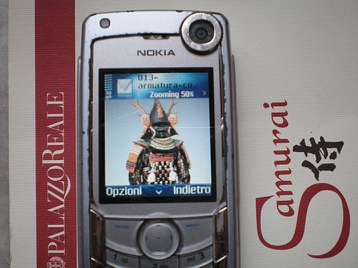
A recently-launched Samurai exhibit in Milan features some text-enabled works.

For the cost of a text message, exhibit organizers send you a picture of the work, plus a detailed description of it. In this case (and yes, that’s my battered Nokia above), there was more information provided with the texted image about the Elk-horned warrior from the Edo period than in the exhibit.

It’s also a better pic than you’d be able to take on the sly. You can download it from your phone as a 60KB image — and then send it as a postcard if you fancy.