Italian Writes Guide Book to Mass

church

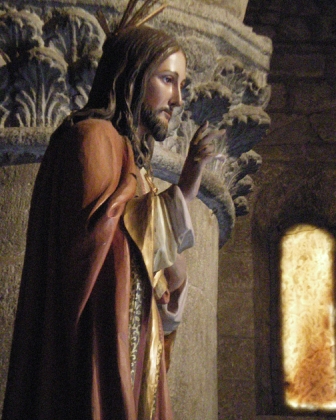
A new guide book for Catholics is designed to lead them back into church by reviewing the services.

Journalist Camillo Langone, also a long-time restaurant reviewer, sat in pews all over Italy to write over 300 pages on weekly mass ceremonies. What makes a good mass (communion given in the mouth, incense) bad mass (electric guitars and too many tambourines), is, much like a restaurant, up to the reviewer, who in this case describes himself as a “fervent Catholic.”

It’s not the first guide book to church going, but it’s the first in Italy, seat of the Vatican and country where the flock is fleeing rapidly. The battle may be an uphill one: 90 percent of Italians are baptized Catholics but only about a third are churchgoers.

Langone’s “Guide to Mass” also reviews the priests of over 200 services, whether their sermons are creative or soporific and whether the church architecture (poor acoustics, hot summer and cold in winter) is conducive to prayer.
Design of the Times in Milan

design_week
Milan buses are plastered with bright red posters reassuring recession-anxious consumers that if there’s a financial crisis, the Salone del Mobile is the answer.

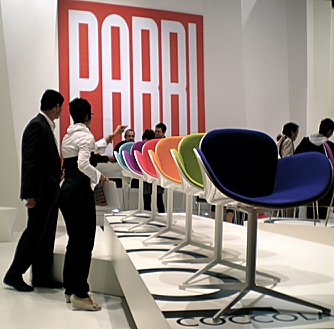
That confident attitude sums up the buoyant mood at the 48th annual International Milan Furniture Fair, which started here on Wednesday and runs until Monday. In a city where fashion is king, design makes the most of its yearly five-day spotlight by showcasing the weird and the wonderful.

Exhibitors at the Massimiliano Fuksas-designed fairgrounds were up 15% to 1,496 from 2008 according to the organizer, Cosmit. Organizers expect to surpass last year’s record of nearly 350,000 visitors. Indeed, antsy lines for the metro, elbowing around the big-name stands and the crush to procure a restorative cappuccino are as fierce as ever.

Full story here.

Milan Design Week: Pac-Man Bookshelf, Ghost Lamps

puckman

Graphic and industrial designer Mirko Ginepro came to my notice with the iPod table for last year’s international furniture fair.

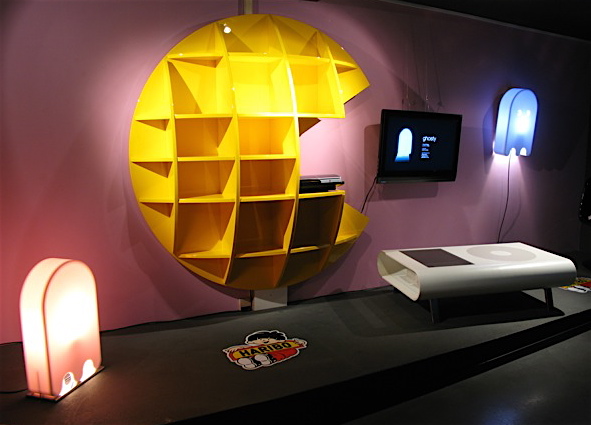
Keeping in the pop-culture theme, this year’s effort for the fair’s fuori salone is a wooden lacquer book case in the form of a giant Pac Man, called Puckman (the original name of the video-game icon), with companion ghost lamps.

Ginepro was inspired by the enduring icon of Pac-Man, he spent long afternoons spent playing Pac-Man against his sister on a Commodore 64 — now he plays it on his iPhone.

If you’re in Milan, it’s at the Nhow Hotel in Via Tortona.
For info, prices etc., here’s his website.

Image courtesy @ Mirko Ginepro

Milan’s Triennale Design Museum Overhaul

designmuseum1

Milan recently gave an extreme makeover to the permanent design collection at the Triennale Museum.
The Triennale Design Museum launched in 2007, but gets a complete over haul including a rotation of the 400 or so pieces on show every two years.

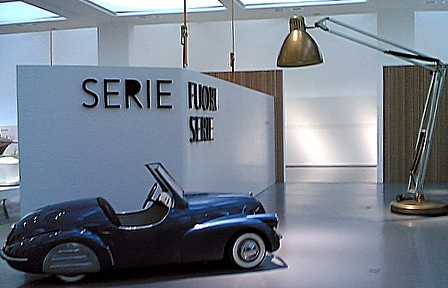
The somewhat murky, nocturnal feel of the inaugural exhibit designed by Peter Greenaway (“The Obsessions of Italian Design,”) was replaced in March by “Serie Fuori Serie” (lit. custom-built series) an airy, bright set-up curated by furniture and industrial designer Antonio Citterio.

The new exhibit, which again puts such humble objects as the stove top espresso maker and the Valentina typewriter alongside prototypes old and new, explores the ties between Italian industry and design innovation.

Pro: the to-scale prototypes and rarities (including a Ferrari, the Alca Volpe pictured above, folding bikes, several scooters and a Piaggio Ape) are definitely worth a look. And the more quotidian objects are still interesting, as you’re bound to recognize something you own — like the two Milanese sciure overheard discussing Plia fold-up chairs — or, in my case, realize the junk store finds may be knock offs of Joe Colombo glasses designed to help assist drinking while smoking.

Contro: It’s still just a small part of the full collection, so good to kill an hour or so (especially if you visit the excellent café or outdoor summer bar) but probably not much more.

Triennale Design Museum
Viale Alemagna 6 (metro stop Cadorna)
Tickets 8€
Hours: Tuesday – Sunday 10:30 am- 8:30 pm
Thursdays 10.30 – 11:00 pm (entrance with an aperitif)

Italian Banks IDs Customers with Family Nicknames

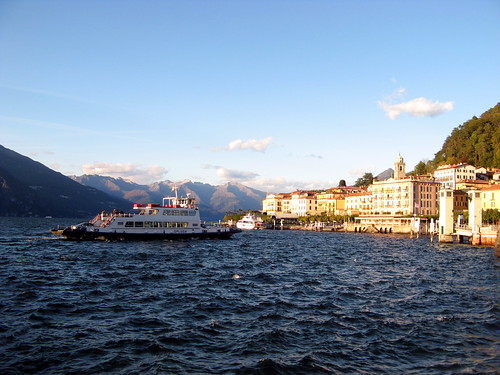
Banks in a small Italian town with too many Mario Rossis are using nicknames to tell customers apart. If the lovely lake region of Bellagio, near Como, has a fault it could be that locals tend to stay in the region and pick the same first names.

In the town of about 3,000 people, two thirds share the same two last names, the local white pages show about 1,300 of them have the last name “Gilardoni” and about 750 are called “Gandola.”

Often given for professions or physical characteristics (how would you like to be known as “nitpicker” or “saw mill?”), the ones used by local banks in Bellagio are also in dialect and have sometimes been handed down for generations. It’s not the first time Italians have resorted to nicknames to tell each other apart, they appear in the phone book of one Sardinian community.

Bellagio’s predicament is an indication of the trend that Italians are back to using traditional saint’s names for their kids instead of foreign names. National statistics bureau ISTAT found (.pdf) that if there are about 30,000 traditional names, half the time parents pick names for their children from just 30, the most popular currently are Francesco for boys and Giulia for girls.

Image used with a CC license, thanks to berniecb

Italians Text Help to Earthquake Victims

After the worst earthquake in 30 years struck L’Aquila killing 250 and leaving 17,000 people homeless, Italians are text messaging donations to help.

Italian mobile operators, including TIM, Fastweb, Wind, Tre and Vodafone, made a single number available for SMS donations to earthquake victims. Cell phone users send a blank text to 48580. They’re charged one euro for each text, cell phone companies promise to donate the entire amount of each message. (As zoomata reader Fabio pointed out, the text donation won’t work from abroad. There are bank transfer details here and, if you don’t know Italian, here’s the Red Cross UK donation page.)

Texters are sent a confirmation that says, “Thank you. With this message you’re helping people in Abruzzo who have been hit by the earthquake.”

Thumb tribes have been sending in support in Italy since 2002, when another earthquake in Southern Italy prompted the first cell-phone fund drive. Other text-based relief campaigns in a country where there are more cell phones than people include €27 million for 2005 tsunami victims.

Image used with a CC license, thanks to marca_pasos

Designated Driver Gets a Bottle of Fine Italian Wine (To Take Home)

allegrini

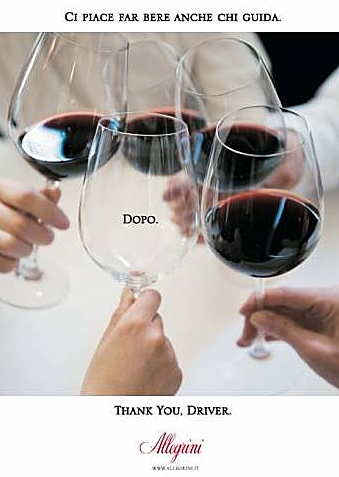
Top-notch Italian wine maker Allegrini will offer a bottle of wine (to be drunk at a later date) to the driver offering to get friends who have imbibed home.

The designated driver promotion doesn’t include the vineyard’s most expensive wines, but the Allegrini red called Palazzo della Torre (a “baby Amarone“), a well-respected nectar of the grape that retails for at least $18 USD, depending on the vintage. The promotion, aimed at Italian restaurants, was launched on the eve of the Vinitaly wine fair.

Nice idea, though if you’re a teetotaler and have spent time in Italy you’ll understand the underlying assumption. For Italians, people aren’t really abstemious, but for some strange reason, they’re just not drinking right now. (That said, for most Italians, moderation is key, check out our face-saving wine vocab.)

The ad promoting the un-drunk driver getting a bottle of wine recites, “We like to offer a drink to those who don’t drive. Later. Thank, you driver. Allegrini.”

Related posts:
Italian Scientists Say Vines May Love Vivaldi
Pasta la Vista, Baby: The Changing Italian Diet

Italy says grape harvest: no grazie