Upside to Financial Crisis: Tomb Raiders Out of Work

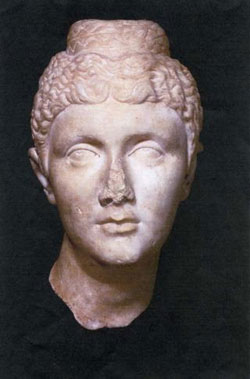
caption: found by police in an antiques market, this bust was put into a 2008 art show of recovered works.

caption: found by police in an antiques market, this bust was put into a 2008 art show of recovered works.

Even tomb raiders have to deal with a market in crisis: in the first half of 2009, thefts of Italy’s art and historical treasures were down 52% compared to last year.

Some 12,716 precious artifacts were stolen from churches, archeological sites, museums and private homes in the first six months of 2008, while 6,000 items disappeared so far this year, according to figures from the art-theft patrol of the Carabinieri.

Many of these paintings, vases, sculptures, religious paraphernalia end up on the international black market.

With thefts down, the Carabinieri have had more time to recover stolen goods. They’ve managed to track down and return to rightful owners 79% more antiques (from 3,955 in 2008 to 7,088), 34% more recovered archaeological finds (from 26,725 to 36,035) and over 3,000% more paleontological artifacts (from 238 to 7,747).

Key recoveries include Pompeian frescoes, funerary urns, objects from the Neolithic Age, bronzes and modern and contemporary art paintings, including an oil on canvas by Giorgio De Chirico.

For at least a hundred years, tomb raiders, called “tombaroli” in Italian, have been ferreting out artifacts and selling them, mostly unhindered, on the international market.

Roberto Conforti, who heads the special art-theft patrol of the Carabinieri, says the black market for artifacts rivals Italy’s drug and arms trade. In the last 30 years over 300,000 objects stolen from tombs have been recovered, according to Minister of Culture statistics.

Need a Place to Breast-Feed? Try a Pharmacy

farmacia

Mothers in Verona, Italy can pop in to city-run pharmacies the next time they need to breast-feed.

They’ll find a quiet back room with a comfortable chair, changing table and bathroom. Thanks to a short training course for pharmacists, they should also find an understanding environment.

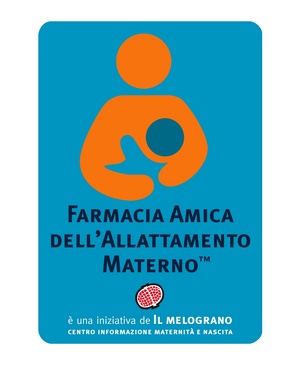
Participating pharmacies have the above logo, which somewhat redundantly says “Friendly Pharmacy for Breast-Feeding Mothers.” (Are they expecting to turn away milk men?)

It started when pharmacist Paolo Delfini came into contact with mother’s association Il Melograno, he realized that moms with newborns were often left to fend for them selves.

While images of the Madonna Lactans are fairly common, Italy’s birth rate is one of the lowest in the world and Italians seem to be out of the habit of seeing women breast feed.

Recently, a mother breast-feeding her five-month-old who was asked to leave a hotel restaurant because the manager said other customers complained made national news.

Thirteen pharmacies are currently offering a haven for breast-feeding, organizers hope to convince the national association of pharmacies to participate in the program. There’s one slight flaw in the breast-feed at the pharmacy scheme — most Italian pharmacies usually close at mid-day and on Sundays, so finding one open could be a challenge.

Italian Supermarket Offers Jobs as Prizes in Raffle

caption: the Tigros campaign banner says "I went shopping and found a job."

To celebrate 30 years in business, an Italian supermarket is staging a lottery where the prizes include ten jobs.

Customers, who must be local residents and over 18, might pick up a job along with the pasta at supermarket chain Tigros. The ad for the publicity ploy (above) says: “I went shopping and found a job.”

“Despite the economic crisis, we’re still growing,” founder Luigi Orrigoni told local papers. We’re opening one store after a remodel and a new store in May. It made sense to celebrate the anniversary by having our customers come to work for us.”

Based in the northwestern city of Varese, family-run Tigros has 59 stores and employs 1,200. They’ve printed 700,000 coupons for the lottery — other prizes includes free groceries — that runs for the month of September. Job winners may stock shelves, work at the check out, meat or fish counter, depending on experience.

If the winners do a good job on a year-long contract, Tigros says they’ll become full-time permanent hires. In Italy that usually means a job for life, with perks such as a guaranteed yearly bonus (one month’s salary) and six weeks of vacation a year.