
A Peek at the Real da Vinci Code

The Codex Atlanticus at the Biblioteca Ambrosiana

The Codex Atlanticus at the Biblioteca Ambrosiana

If you’ve ever wondered what’s inside Leonardo da Vinci’s notebooks, you’ve got six years to take a look.

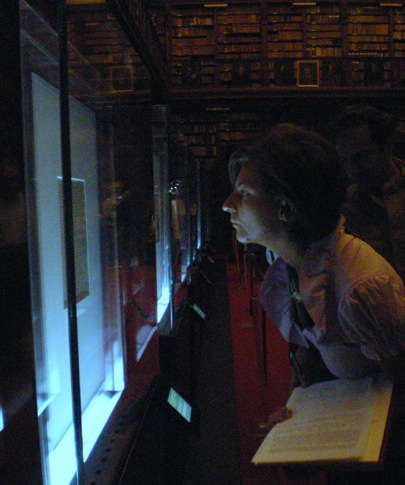
Milan, where the original Renaissance man worked for years, has brought the largest collection of his drawings and writings, the 1,000-plus-page Codex Atlanticus, to the masses. The Codex is normally housed in the city’s Biblioteca Ambrosiana, where it is off-limits even to most scholars. But until 2015, visitors can view a rotating exhibition of selected pages from the real da Vinci code, grouped into themes including mechanical flight, anatomy and war machines.
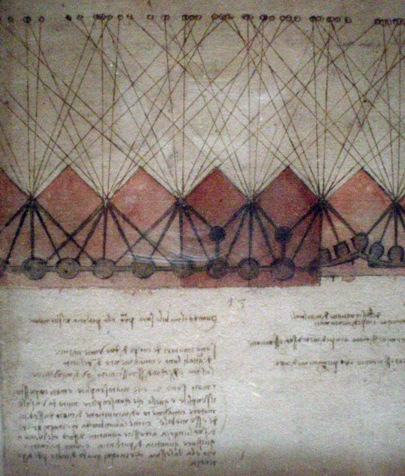
Finished drawing for strut solution@ Veneranda Biblioteca Ambrosiana -Milano

Finished drawing for strut solution@ Veneranda Biblioteca Ambrosiana -Milano

Among the pages, dating from 1478 to 1519, visitors will find engineering designs, recipes, doodles from apprentices, as well as sketches for da Vinci’s many ahead-of-his-time contraptions. Da Vinci, who reportedly made sketches of his observations on loose sheets or on tiny pads he kept in his belt, left behind the largest literary legacy of any painter.

“It can be a little embarrassing, when people only expect to see finished drawings or amazingly detailed sketches,” said da Vinci expert Pietro C. Marani, curator of the first three-month exhibit, “Fortresses, Bastions and Cannons.”

“What you’re really looking at is a cross-section of art, science, technology, mechanical studies – all woven into the daily life of an amazing figure, but it’s not always what you might expect,” he said.

Full story on the Wall Street Journal Europe

Codex Atlanticus Exhibit Info:
Hours: Tuesday – Sunday
8:30 am – 7:00 pm
Price: €21.50 for both halves of the exhibit, includes reservation.
Online tickets and reservations: www.ambrosiana.it
Tuscan Town Boasts Italy’s Highest Birth Rate

Picture 5

Although Italy’s birth rate is one of the lowest in the world, one small Tuscan town, Quarrata, is turning that around. Last year, there were 256 bambini born in a hamlet of 25,000 — resulting in a birth rate of 10.32, about what was normal in Italy 30 years ago.

“We don’t know exactly why so many people are having kids here, ” mayor Sabrina Sergio Gori, who is also a doctor, told newspapers. “It’s definitely not a bad place to live. There’s work, plenty of it in furniture factories and some of the largest garden centers in Europe.”

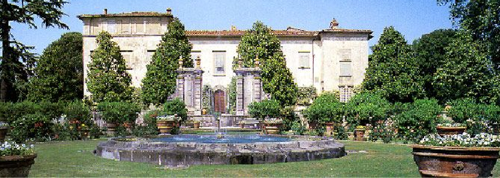
Aside from increasing schools and day care centers to meet the newcomers, Quarrata — about 20 miles northwest of Florence — also holds a giant collective birthday party in June every year for the town’s kids in a Medici villa called La Magìa (pictured above). Part of the park grounds have been turned into a playground, too.

The villa is a symbol, Gori says, that parents who have kids know they’re not alone in raising them. She believes more Italians don’t have children — the national birthrate is 1.3 — because they have one and realize how hard it is.

“Many would like to have at least two kids,” she said. “But the lack of services and the expense takes away any enthusiasm they have for becoming parents again.”

Unlike other parts of Italy, the increase isn’t just from births by foreigners. Immigrant families in Quarrata are responsible for about 20% of the birth uptick.

How to See Caravaggio’s “Adoration of the Sheperds” During Restoration

Picture 1

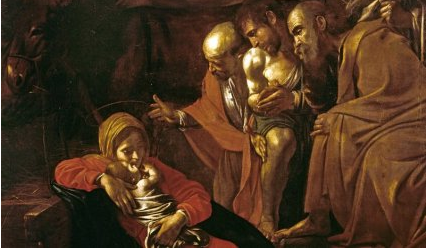
Caravaggio’s 1609 masterpiece “Adoration of the Sheperds” is getting touched up in public — here’s how to book the free visits.

Like a lot of things worth doing in Italy, it won’t be particularly easy. Groups of 10/15 people will be allowed to watch restorers at work in Rome’s lower chamber of parliament until it is returns to pristine condition in January 2010. Visits are free, but available only Wednesday and Friday afternoons and last about 20 minutes.

Sponsored by broadband telecommunications company Fastweb, the online reservation form shows which dates are still available. (Here’s the Google translation into English, if you need it).

Ever since a restorer acquaintance let me climb up on Giambologna’s Ferdinando I de Medici statue to check out her work, I’ve tried to get a gander at restorations whenever possible, like Donatello’s David at the Bargello or at the frescoes at Santa Croce.

If you’re in Rome, it’ll be worth the trouble.