Italian Scientists Say Vines May Love Vivaldi

Tuscany
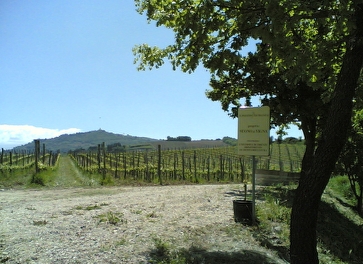
Wired for sound: vineyards at Paradiso di Frassina in Tuscany.

Just in through the grapevine: Music helps grow healthier plants.

That’s the preliminary result of research by Italian scientists who have been examining vineyards exposed to classical music to see if sound makes the plants grow larger and more quickly.

While sound has long been thought to influence plant growth, this is the first time anyone has investigated the effects of music outdoors on Sangiovese vines, which are best known for producing grapes that go into Tuscany’s famous Chiantis.

Continue reading

Digital Da Vinci Codes: Thousands of Leonardo’s Papers Go Online

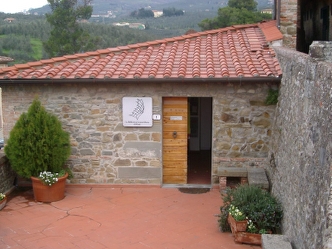
Leonardian library, Tuscany
by Nicole Martinelli

The tiny brick library in Leonardo Da Vinci’s hometown is putting 3,000 pages of the genius’ work online in a high-resolution, searchable archive.

The Leonardian Library in Vinci, Tuscany, is making the Madrid Codices and the Codex Atlanticus — two collections of scientific and technical drawings — available as a free digital archive called e-Leo.

The EU-financed project will also digitize the Windsor folios and 12 notebooks from the Institut de France for a total of 12,000 pages, creating the most extensive public online archive of Leonardo’s codes.

It’s a powerful resource for amateurs — Renaissance groupies, crowdsourcers looking for technical solutions — who make half of all requests to the library in the hamlet where Leonardo was born.

E-Leo won’t be putting lone librarian Monica Taddei out of a job anytime soon, though. Continue reading

Italian Porta-Potty Contest

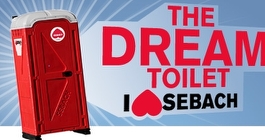
Dream ToiletIf you’ve ever visited the Bel Paese, you know how scarce public toilets are. Before you’ve visited any number of nicely crumbling ruins, your thoughts will inevitably turn to the loo. Where to find one, how to avoid the Turkish kind and how to convince your traveling partner to have yet another caffé so you can go.

Oliviero Toscani, former Benetton ad guru, shares your pain. He convinced porta-potty company Sebach to hold an international “dream toilet” competition for architects, designers and engineers. Creator of the ideal privy — chosen both on aesthetics and feasibility for mass production — wins €5,000 (circa $6,600). Get cracking: the deadline is August 4.

Italians Create ‘Pasta-Effect’ Pill for Dieters

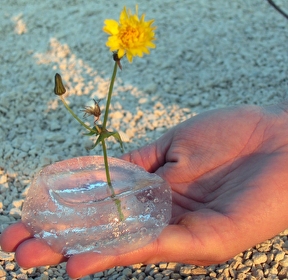
Fat pill gelItalian scientists are testing a new diet pill that turns into a clear, gelatinous blob the size of a tennis ball that may help shrink waistlines by giving dieters a sense of satiety.

The pill, currently undergoing clinical trials at Rome’s Policlinico Gemelli hospital, would be downed with two glasses of water at the first sign of a stomach rumble.

“The effect is like eating a nice plate of pasta,” said Luigi Ambrosio, lead researcher on the project at the National Research Council’s Institute for Composite and Biomedical Materials in Naples. “If you sit down for a meal with a stomach that already feels full, you’ll end up eating less.”

The unnamed pill is made from a cellulose compound of hydrogel, a material that’s powdery when dry but plumps up to a cousin of Jell-O when wet. The gel can soak up to 1,000 times its weight. A gram in capsule form quickly balloons from the size of a spit wad to a ball that holds nearly a liter of liquid. Ambrosio and fellow researcher Luigi Nicolais, now minister for reform and innovation, noticed the burgeoning girth of Americans during a trip to the United States in the ’90s.

Continue reading

Italy: Study or Work without Stay Permit

Foreigners can now live in Italy for study or work for up to three months without the dreaded stay permit (permesso di soggiorno).

This cuts in half the amount of bureaucratic headaches — paperwork, rules, lines and time — needed to be legal here.

Pinch of salt: the law (here’s a pdf, Italian only) went into effect May 28, 2007 and still awaits a ministerial decree to become operative.

Would-be expats would do well in coming months to carry a copy of the law with them to brandish in front of officials, who because they haven’t been briefed on the procedure with operatives tend to just say “no.”

Also keep in mind that living legally to study or work in Italy was a two-step process: requiring a visa from country of origin before leaving, then a stay permit after arriving in Italy. It’s unclear whether visas are still required or not — it may help to check with this widget at the Italian ministry of Foreign affairs first.