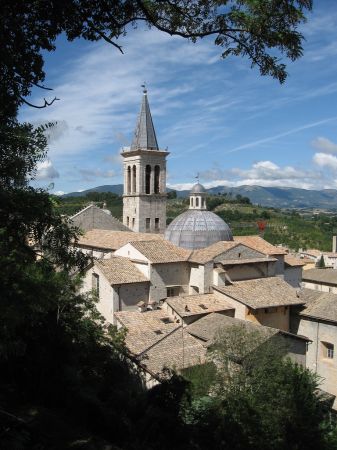
“Heart Pod” Slows Troubled Tickers with Music

Music be stills rapidly-beating hearts — even those damaged by heart failure, say Italian researchers.

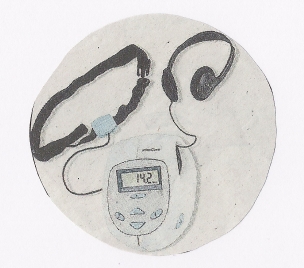
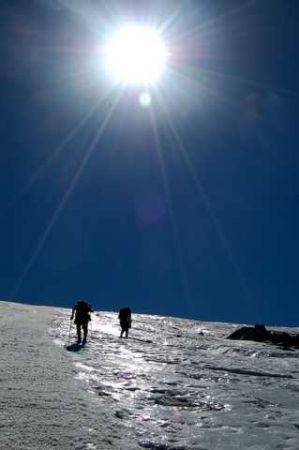
Using an mp3 player that looks a little like the iRosaryheart pod, Gianfranco Parati, head of cardiology at the Italian Auxology Institute, first tested the device on himself and fellow researchers. They tried it while atop Italy’s 4,000-meter high Monte Rosa to see if listening to music that synchronized and then slowed heartbeats would help the heart work more efficiently.
“We started with the idea that slower breathing would have specific physiological effects,” Parati said. Among them, he added, were slower, deeper breathing which uses more of the alveoli, thus improving the quantity of oxygen in the blood.

Then the team conducted a study on 24 patients who had suffered heart attacks. Half of them used the device. In less than three months, the 12 patients who practiced slow breathing (for 15 minutes, twice a day) had a significant improvement in heart pumping capacity, blood oxygen levels and other symptoms when compared to the group receiving traditional therapies. At the end of the study, patients who were “treated” with music were diagnosed with a less severe class of cardiac insufficiency.

The “heart pod” works like this: when the patient breathes, the movement of the chest presses against an elastic band. The computer emits musical tones that mimic spontaneous breathing intervals, 15-18 times per minute. After a few minutes, the music changes causing the patient to slow breathing down to just four or six times a minute.

To see whether music makes tickers reach pianissimo under stress, Parati and his team will try out the device on Mount Everest.
Happiness is a Warm Plate of Pasta, Docs say

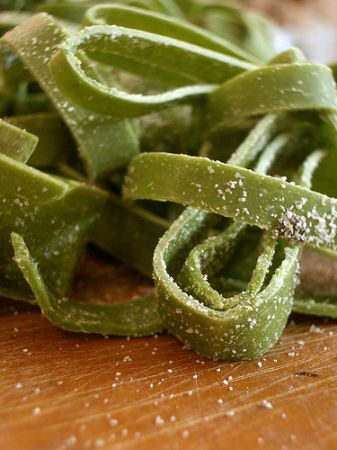
pastaItalian scientists are now defending the national dish, plagued by price hikes and cut by those counting calories, as a mood improver.

“Pasta contains tryptophan, an amino acid that turns into serotonin, the so-called hormone of happiness,” said Mauro Defendente Febbrari, an expert in metabolic diseases. “That is why eating pasta gives you a feeling of wellbeing and pleasure.”

His remarks come before the 10th edition festival dedicated to pasta in all its varieties called I Primi d’Italia, the name a play on the dish as a first course and the best in Italy.

If pasta is the ultimate mood food, Italians must be a happy bunch: they are among the top consumers of maccheroni, tortellini and linguine on the planet. Each Italian winds up some 61 pounds (28 kilos) of spaghetti a year.

Continue reading

Italians Price Check Via Cell Phone

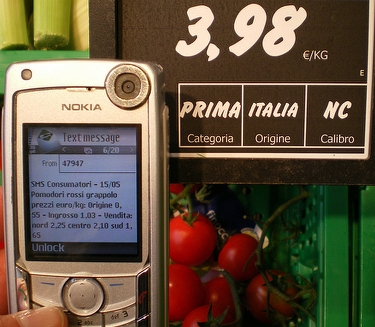
Killer Tomato? Prices higher than expectedCash-strapped Italian consumers can now use text messages to tell them if the price is right.
Euro-pinching shoppers thumb in product names — from pasta to produce and parmesan cheese — and a text message speeds back with the average retail price for North, Central and Southern Italy.

Called SMS Consumatori (SMS consumers), the three-year program, organized by the Agriculture Ministry, is free to users.

SMS Consumers started two years ago with a three-month test run, offering info on a limited number of fresh produce; it’s back bigger, sleeker and with more bells and whistles, sort of the Ferrari of text message price watches.

Continue reading

Melting Glaciers Get Blanket Treatment

Presena GlacierTo stop Alpine glaciers from melting, Italian scientists want to cover them with blankets.

Large swaths of reflective polyester and polypropylene material will protect the Presena glacier this winter, making it look slightly as if it had been tee-peed, in an effort to help the ski mecca retain its cool. Two years ago, Swiss neighbors started blanketing the alps to prevent slippage.

“When we first heard about covering the glaciers, we wrinkled our noses at the idea,” says Claudio Smiraglia, president of the Italian Glacier Committee. “Now we want to know if, when and how it works.”

The Presena cover-up comes after University of Milan researchers studied the blanket effect on a patch of the Eastern Dosdè glacier, 2,740 meters high and the tallest glacier in Lombardy.

Initial results gave those involved the warm fuzzies: after 90 days under the 150-meter-area covered by the white blanket , the protected snow and ice sheet were 1.90 meters thicker (about 6 ft. 2″) than uncovered portions.

Whether blankets are a viable way to keep the Alps in their place remains to be seen.

“We must be very cautious, about possible applications in the field of land management and natural hazards,” said Jean Pierre Fosson, director of the Foundation for Courmayeur Safety. “We must take into account the costs and environmental sustainability. If it takes helicopters or other mechanical means to put down the blankets and take them back up, energy consumption and CO2 emission will increase.”

Melting glaciers are especially felt in this part of Europe, doomsday predictions have them warmed away to nothing by 2050.

Image via flickr.

Italian Town Takes English Lessons

Spoleto -- now speaks English?There will be no more shoulder shrugging when tourists ask directions in the Umbrian town of Spoleto: officials have decided it’s about time locals here learned English.

Though known for hosting the international Festival of Dei Due Mondi, the locale of 38,000 could use a language boost, according to the city culture councilman.

The answer? A program called “I Speak Spoleto” featuring American movies. A square in the town center hosts free outdoor flicks until mid-September. It’s the first in an ongoing series of language programs for business people, the police department, administrators and everyone else.

The ambassadors of English-language culture include: “Grease,” “Saturday Night Fever” and the “Blues Brothers.” These old faves will seem new to Italians watching them in English for the first time — at least in the case of “Grease,” the songs were translated in italiano, too.

It’s a timely idea: Italians aren’t the most linguistically agile in the EU when it comes to English, under 30% have any knowledge of it and 60% aren’t able to hold a conversation in English. Giuseppe Roma, head of the national census bureau, Censis, recently called it a “sad situation,” adding that languages aren’t taught well in Italy.

So kudos to Spoleto for trying out something new and fun, but one wonders, however, just how much help the French accents will be in “Ratatouille,” the film showing as part of the English for kids program.
Image courtesy @Nina.

More from the archives:
That’s amore: Italy’s favorite word
Italians Fight Flood of English Words
40% of Italian Words “Extinct”
Kids to Adults: Please Use Better Italian