
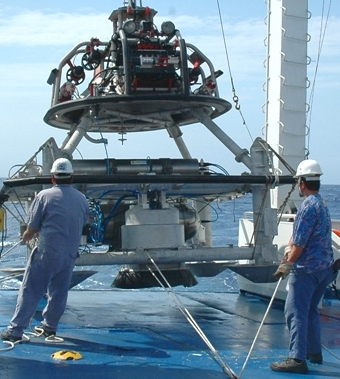
 Accurate, timely tsunami alert systems have proved more elusive than the Loch Ness Monster, but a new prototype testing the waters in the Atlantic may change that.
Three-ton Italian-designed Geostar (Geophysical and Oceanographic Station for Abyssal Research), set down about 150 kilometers off the coast of Portugal in the Gulf of Cadiz, has been monitoring movement and water pressure since 2008.
Geostar squats 3,200 meters below the surface on a site known for tectonic twinges — the epicenter of the 1755 Great Lisbon Quake and resulting tsunami — where researchers expect at least three or four small seismic events during testing.
Ocean bottom seismometers and pressure sensors in the station detect both quakes and changes in the height of the water column, this one-two approach may help better determine which quakes result in killer waves. Continue reading